Karim Abualroos
Best Selling Author
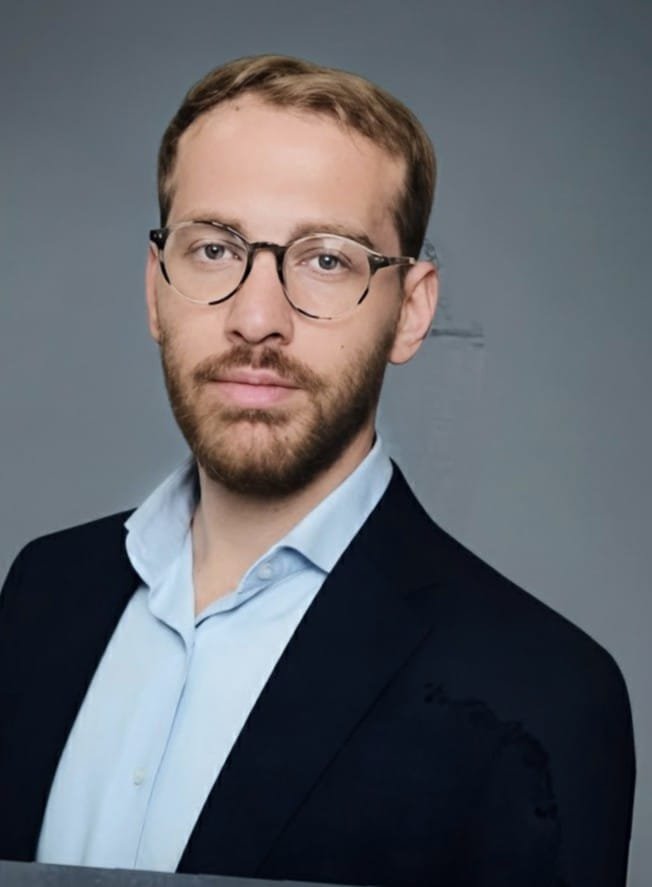
Karim Abualroos is a Palestinian writer and researcher whose work explores the intersections of politics, culture, and memory in Palestine and the broader Middle East. His research focuses on academic freedom, knowledge production, Gaza’s lived realities, diaspora and identity, and youth political participation. Alongside his academic work, he publishes both essays and fiction in Arabic and English, including his novel A Drowned Seeking No Survival.
My Story
My name is Karim Abuarloos, and I was born and raised in Gaza. This city embodies within its narrow geography and heavy memory a paradoxical blend of resilience and wound, of endurance and creativity. Gaza is where my earliest consciousness was shaped: a place marked by blockade and daily hardship, but also a space of profound belonging, of resistance through life itself, and of constant searching for ways to articulate and to influence. That early experience was formative for me. It taught me that the world is not a neutral terrain, but rather a dense web of power, narratives, and interests that need to be questioned, unpacked, and challenged.
I pursued my undergraduate degree in Political Science at Al-Azhar University in Gaza, where I came to realize that politics is not only about state institutions or the contest for power. Politics is also a discourse, culture, and identity, as well as the shifting structures of everyday life. During my years as a student, I engaged actively in campus debates and youth initiatives. These experiences strengthened my conviction that Palestinian youth are not merely passive victims of circumstance, but key actors in reshaping their future and redefining their political voice. From this conviction, my research journey began, bridging the academic field of political science with the lived reality of people navigating dispossession and aspiration.
Later, I moved to Beirut to pursue a Master’s degree in Political Science at Saint Joseph University, where I deepened my knowledge of political thought, contemporary democratic theory, and human rights. I specialized in Middle Eastern politics and the dynamics of the Palestinian–Israeli conflict. Beirut was never only a city of study for me—it was a living classroom of diversity, contradiction, and dialogue. There, I learned how to balance rigorous academic analysis with attentiveness to the complexities of human experience. My master’s thesis, which explored the political participation of Palestinian youth, sought to trace the transformation from non-discourse to discourse—the moment when an entire generation shifts from marginalization to agency, from silence to articulation.
Alongside my academic work, I ventured into literature. I wrote and published a novel entitled “A Drowning Man Does Not Try to Survive”, a literary attempt to capture the intimate textures of despair and hope, and to blur the line between politics and personal existence. For me, writing fiction is not an escape from politics but a way to deepen it from another angle: through the lens of the self, of memory, of the fragile yet persistent human dream. Fiction allows me to articulate what research cannot always contain, and to use imagination as a method of both resistance and knowledge.
Over the years, I have published articles in both Arabic and English in various journals and platforms, participated in academic conferences, and contributed to cultural and intellectual debates about the region’s future. My central research and scholarly interest is the politics of the Middle East, with a particular focus on Palestinian–Israeli affairs. Yet I approach these questions not only through the binary of direct conflict, but also by exploring their intersections with Europe: How is the Palestinian narrative translated in Western contexts? How do European policies converge or conflict with Palestinian demands for rights and freedom? And how are narratives reshaped in a transnational media and intellectual space that constantly negotiates meaning across borders?
My intellectual and ideological grounding rests on the belief that freedom is not a luxury, but an existential condition. Democracy, in my view, cannot be reduced to elections; it must be measured by the capacity of people to express themselves, to participate, and to hold structures of power accountable. I am unapologetically aligned with the struggle for human rights and social justice, and I see the Palestinian identity not as a limitation but as a bridge—an entry point into wider conversations about oppressed peoples, liberation struggles, and global solidarity. To me, exile is not only a loss of homeland but also an opening: a chance to construct new spaces of thought and practice, to weave together experiences that transcend borders.
Professionally, I am driven by a conviction that knowledge must not remain confined to university shelves. It should be brought into the public arena. I have therefore dedicated myself to bridging academic research with civic and cultural practice. This commitment takes shape in various ways: writing analytical essays that are both accessible and rigorous; organizing workshops and public discussions; developing independent media and cultural platforms; and participating in community initiatives that foster dialogue and trust. What concerns me most is how knowledge can be transformed into an instrument of change, and how ideas can become practices that touch people’s daily lives.
I write in both Arabic and English, always striving for clarity of language. I do not seek to simplify what is complex, nor to complicate what can be stated clearly. Instead, I aim to guide readers between analysis and imagination without losing orientation. I believe that the real strength of a writer and researcher lies in the ability to reorganize chaos—to offer new narratives that allow people to make sense of the world they inhabit.
What distinguishes my path is the combination of Palestinian national experience—which confronts me directly with questions of identity, exile, and justice—and scholarly expertise—which equips me with tools to examine those very questions critically. This duality enables me to interact with diverse audiences, ranging from academics and policymakers to activists and general readers seeking a deeper understanding. Through this website, I want to open a door for collaboration: in research, in joint writing projects, in cultural initiatives, or simply in conversations that expand our shared horizons.
My professional motivation is rooted in personal conviction. Gaza taught me to value life itself, to see in every act of writing or speaking an act of survival and resistance. Beirut taught me that diversity is a source of strength, and that dialogue enriches positions rather than weakening them. Europe has taught me that the Palestinian voice has a place in the global public sphere, and that it is our responsibility to articulate it in ways that reveal its complexity rather than reduce it to cliché.
Ultimately, this website is not meant to be a static résumé or a mere archive of texts. It is an attempt to create an open space where literature meets politics, where personal experience is placed alongside scholarly analysis, and where readers become partners in the search for meaning. Here you will find my novel, my research, my essays, and ideas that are still in formation. You will also find an invitation to collaborate—whether through research projects, cultural initiatives, co-authored writings, or any endeavor that seeks to make knowledge more present and impactful in public life.
Karim Abualroos
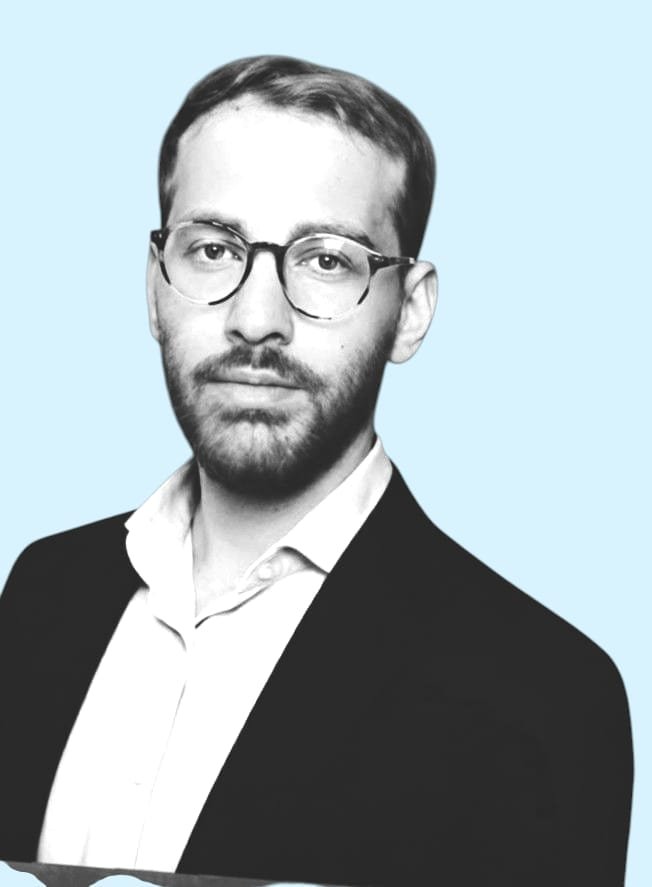
Karim Abualroos is a Palestinian writer and researcher working at the intersection of politics, culture, and memory in Palestine and the Middle East. He welcomes collaborations, public talks, and editorial projects.